

The sound in the hallway
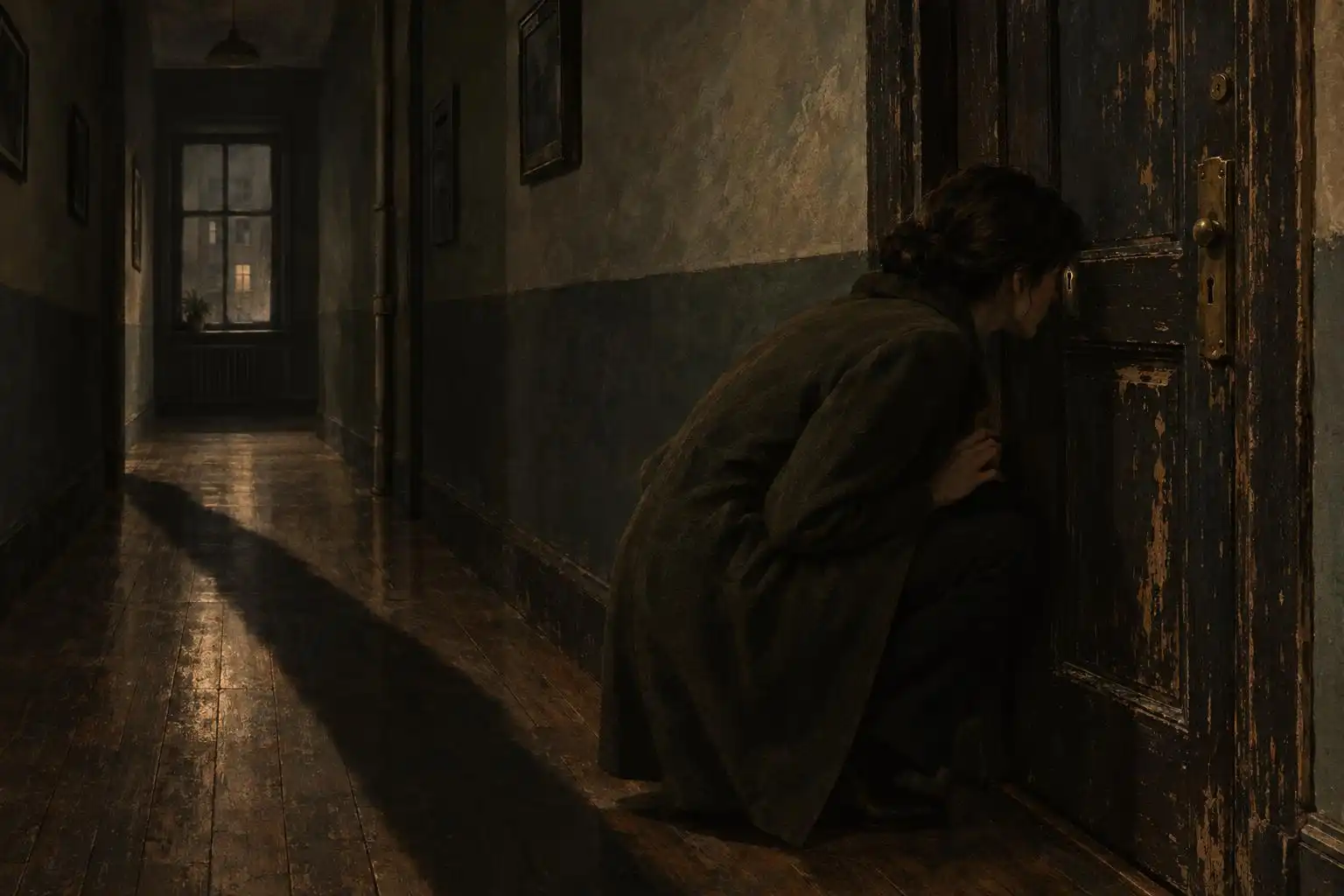
Someone is looking through a keyhole. They are absorbed in what they can see on the other side of the door. Then they hear footsteps in the hallway. Suddenly, they are aware of themselves as a person crouching at a door, doing something they might have to explain.
This is Jean-Paul Sartre’s famous example in his discussion of “the look” in Being and Nothingness. Its force does not depend on whether spying is wrong, or even on what lies behind the door. Sartre wants us to notice the speed of the change. Before the footsteps, the person is intent on the room. Afterward, their own posture and conduct stand out with painful clarity.
Before the footsteps
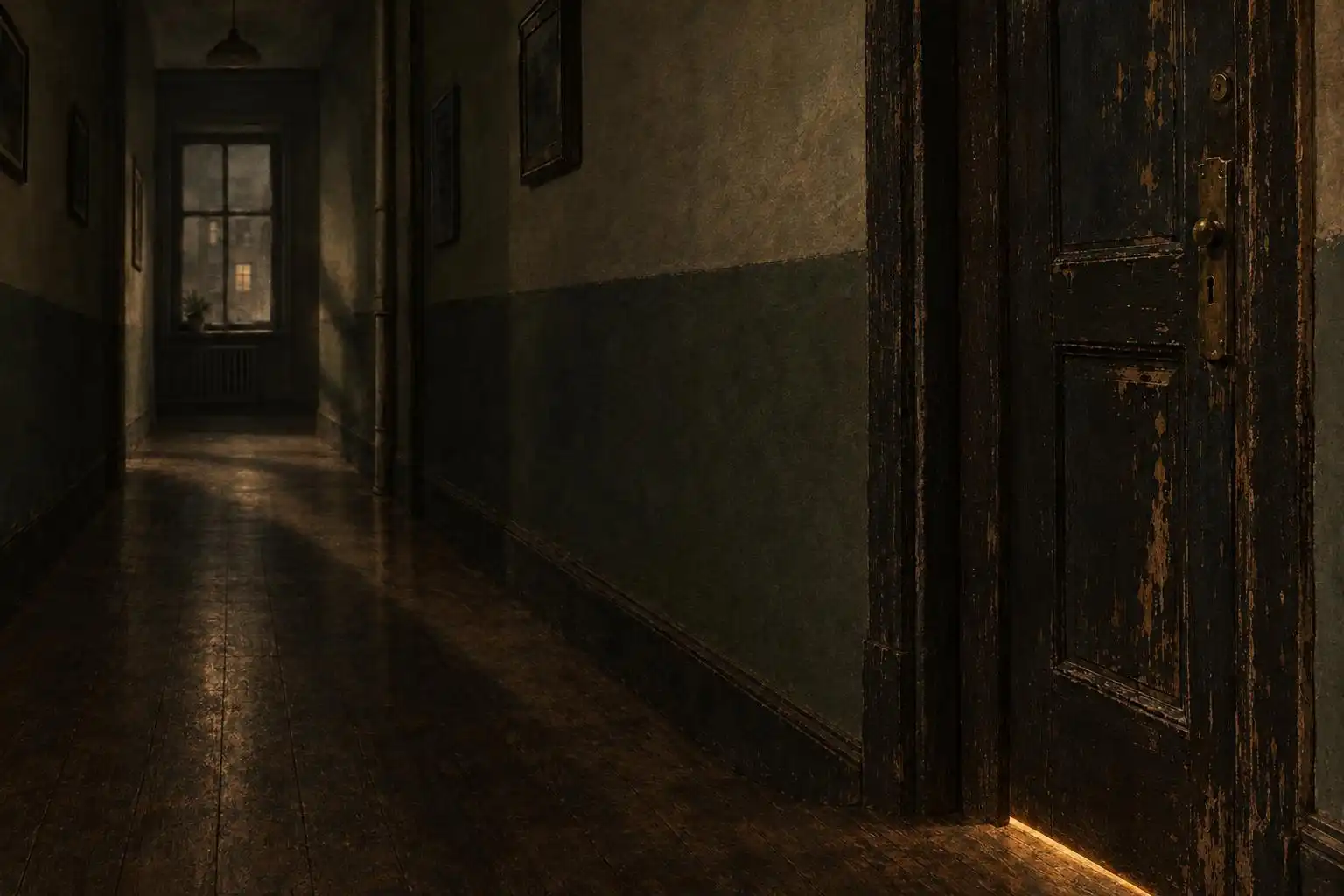
Sartre describes the person at the keyhole as acting without reflecting on themselves. This does not mean they are unconscious or unable to say what they are doing. They are attentive to the door, the hallway, the possibility of being discovered. But their attention runs outward, toward the task and its obstacles, rather than inward toward a portrait of the sort of person they are.
That distinction is easy to miss. We often assume that every action comes with a little observer inside us, watching and judging it. Sartre’s example suggests otherwise. When you reach for a cup, you need not first identify yourself as “a person reaching for a cup.” You encounter the cup as something to grasp. At the keyhole, too, the door is first a means to an end, not a prop in a scene about the spy.
What shame tells us
The footsteps change the scene because they suggest another person who could see it. Sartre calls the resulting feeling shame. It is not simply a private verdict—“I have broken a rule”—followed by an unpleasant emotion. Shame brings a different way of encountering oneself: I am that person at the door, visible from a place I do not occupy.
Nor must the observer actually condemn the act. They might be indifferent, amused, or unaware of what the person at the keyhole is doing. The sting begins with the possibility that the action has a meaning for someone else. The person at the door can choose what to do next, but cannot choose how the scene first appears to the one arriving in the hallway.
This is why Sartre thinks shame tells us something about our relations with others. I do not first study another person and infer that I am visible to them. I find myself caught up in a situation where their viewpoint matters to what I am doing. In his terms, I discover myself as a being-for-others: not only someone who acts, but someone who can appear in another person’s world.
Neither a mirror nor a verdict
It would be tempting to turn Sartre’s point into the claim that other people tell us who we really are. That goes too far. The onlooker sees a person peering through a keyhole, but cannot see every intention, hesitation, or history that brought them there. Their view is real without being complete.
The reverse is also true. The person at the door cannot simply dismiss the onlooker’s view as a mistake about their “true self.” They really are crouching there; they really can be seen. What unsettles them is that this visible self belongs to them while escaping their control. They can stand up, offer an explanation, or walk away. They cannot make the other person’s perspective into their own.
Sartre’s language of becoming an “object” for another person can sound harsher than this modest observation. He does not mean that being seen turns someone into a lifeless thing. He means that an aspect of their existence is now situated outside their own initiative, in a world organized by someone else. The person looking through the keyhole remains free to act, but freedom does not include command over every meaning an action acquires.
If nobody was there
Sartre adds a complication: the footsteps might turn out to be nothing of the kind. Perhaps there was a creak in the floor, or a sound from outside. The person at the keyhole might feel shame before discovering that nobody saw them. Does that make the experience entirely imaginary?
Not for Sartre. The mistake concerns whether someone was there at that moment. It does not erase what the alarm disclosed: the person’s actions can be seen from elsewhere. The hallway is not merely empty space behind their back. It is a route by which another person might arrive and find them at the door.
That leaves a question the example cannot settle for us. When the person turns toward the sound, what exactly are they bracing to meet: a witness, a judgment, or a version of themselves they cannot see directly? Sartre’s scene stops at the turn. For an instant, the person at the keyhole is no longer looking through it, yet does not know whether anyone is looking at them.


Leave a Reply
You must be logged in to post a comment.