
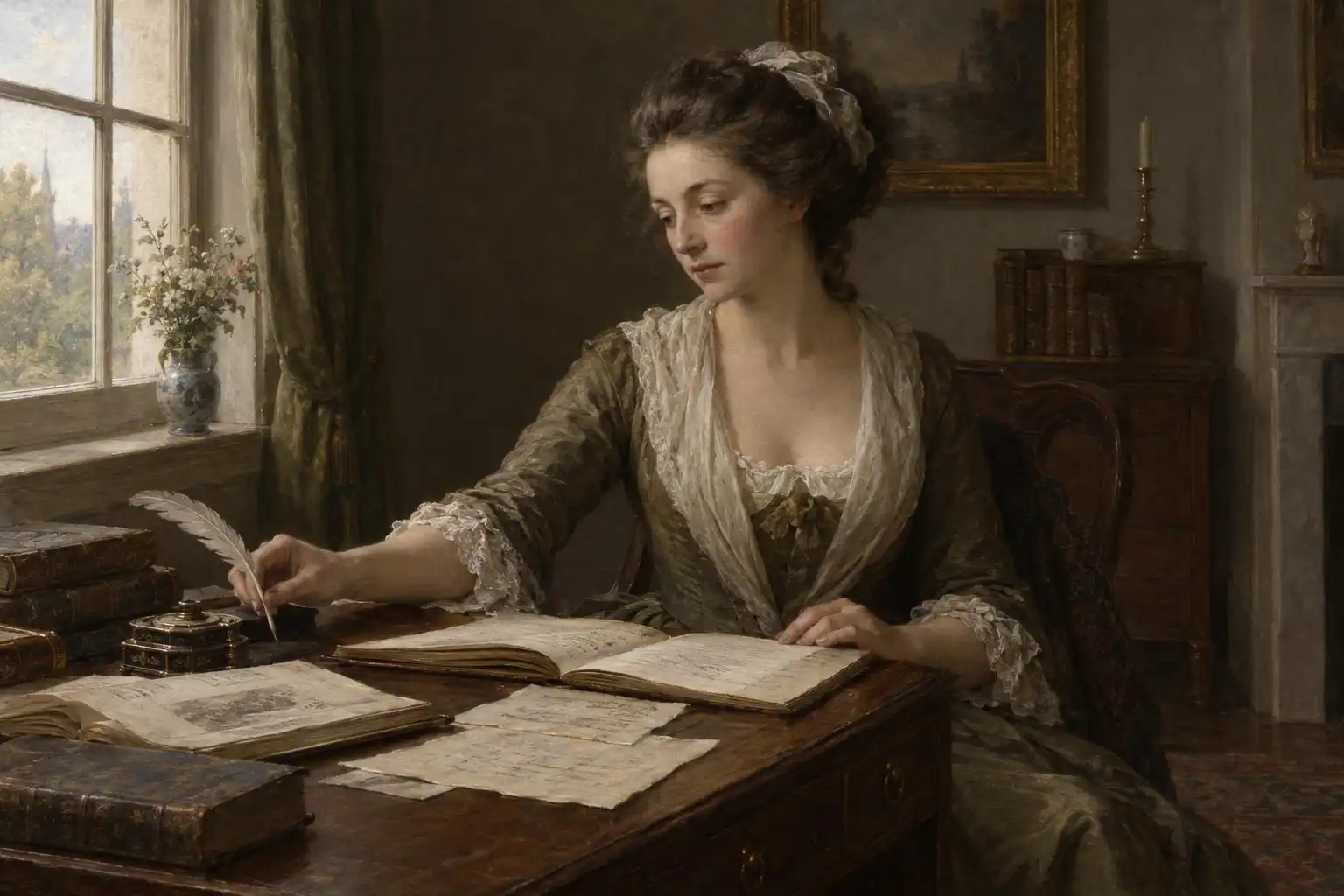

What if the qualities praised as “feminine” were not natural qualities at all, but the results of an education? Mary Wollstonecraft’s A Vindication of the Rights of Woman, published in 1792, asks readers to consider what happens when girls are taught to seek approval before they are taught to exercise judgment. Her answer is not simply that women deserve more lessons. It is that a society cannot demand virtue from people it has trained to be dependent.
The education of Sophie
Wollstonecraft found a particularly clear opponent in Jean-Jacques Rousseau. In Emile, his influential account of education, Rousseau gives the boy Emile an upbringing intended to develop his independence and judgment. Sophie, the girl destined to be his companion, is educated differently. Her training is shaped around the needs and tastes of men.
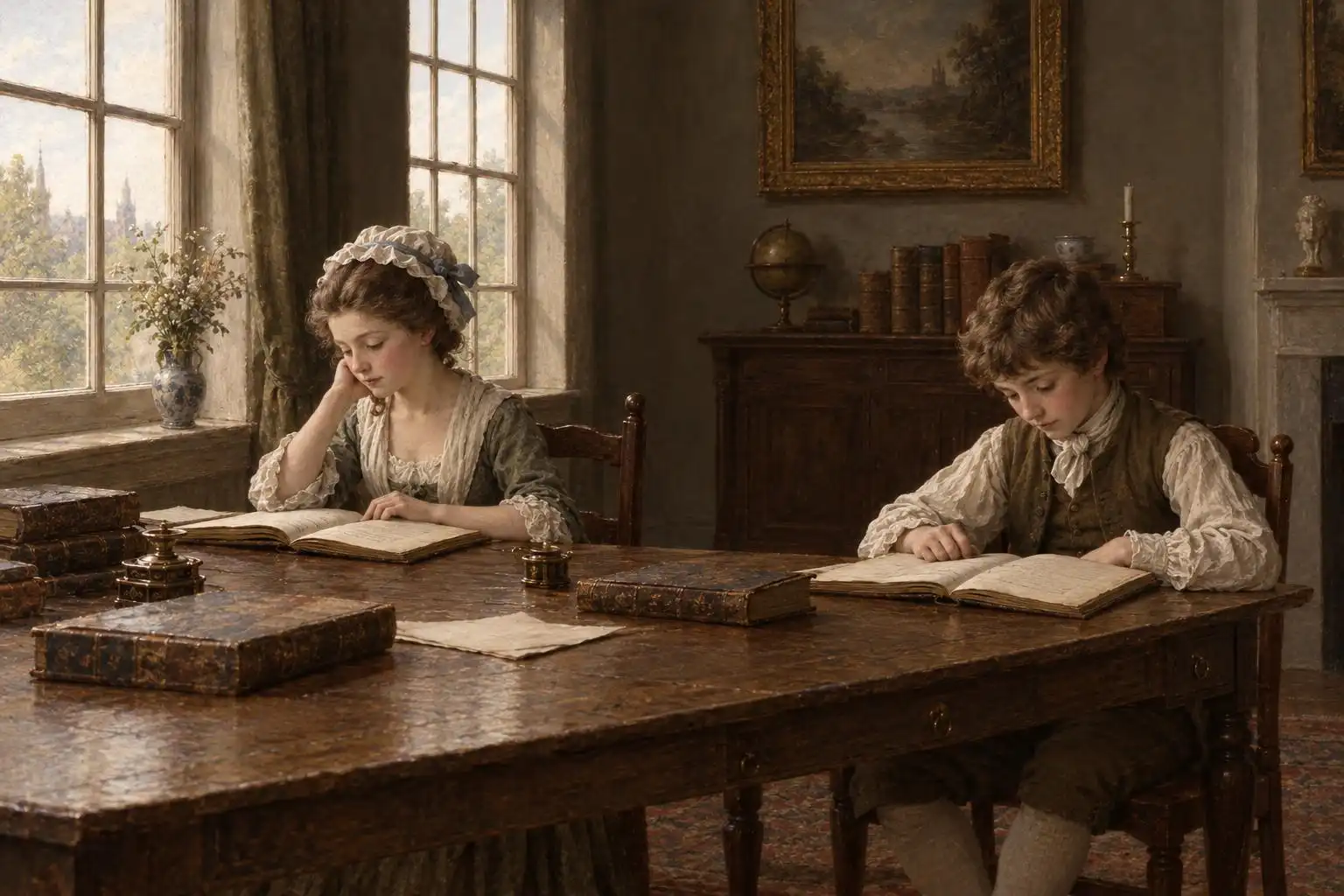
Wollstonecraft does not deny that Emile and Sophie may grow into different adults. She disputes Rousseau’s confidence that his educational scheme reveals what women are naturally like. If a girl is rewarded for pleasing others and discouraged from reasoning for herself, her later dependence cannot be offered as proof that dependence is her nature. The lesson has helped produce the evidence used to justify it.
This is the central move of the Vindication. Wollstonecraft shifts the question from “Are women suited to freedom?” to “How could we know, while we educate them for subordination?” Her argument asks readers to examine the conditions under which claims about human nature are made.
Why pleasing is a poor moral education
Wollstonecraft is especially concerned with the kind of power available to a woman denied independence. If safety and status depend on a man’s favor, cultivating beauty, charm, and apparent weakness may be sensible strategies. But a strategy for surviving dependence is not the same thing as a moral ideal.
She argues that an education devoted to pleasing encourages women to monitor appearances rather than examine reasons. It can reward insincerity: a woman who must influence others indirectly may learn to flatter or conceal what she thinks. Wollstonecraft’s point is not that women are uniquely vain or manipulative. It is that institutions can make those habits useful and then condemn the people who acquire them.
Her account also exposes a contradiction in the men who celebrate female delicacy. They want wives and mothers capable of raising children well, sustaining friendships, and acting responsibly, yet they praise an upbringing that prizes helplessness. Wollstonecraft refuses to treat helplessness as a virtue merely because it is attractive to someone with power.
Can virtue have two standards?
For Wollstonecraft, virtue requires the use of reason. A person must be able to judge what is right, not merely do what another person wishes. That is why she rejects the idea of separate moral standards for men and women. Courage and self-command cannot be duties for one sex but defects in the other simply because independence unsettles an established arrangement.
This does not mean that she wants women to imitate every habit admired in men. She is sharply critical of male vanity, sexual license, and the pursuit of rank. Her claim is more demanding: both sexes must be answerable to principles that do not change according to who holds power. An unjust advantage is no better for being customary.
One of her best-known lines makes the distinction plain: “I do not wish them to have power over men; but over themselves.” Self-government, not dominance, is the goal. It matters because without some authority over one’s own choices, even a generous act is difficult to distinguish from obedience or fear.
Schools cannot do the work alone
The Vindication calls for a more substantial education for girls, including opportunities to develop their minds alongside boys. Wollstonecraft favors public day schools and shared early instruction. Learning together would challenge the assumption that girls exist chiefly to attract boys, while giving both sexes practice in treating one another as fellow human beings.
Yet classrooms are only part of her argument. Marriage, property, and the narrow range of respectable occupations also shape women’s choices. A woman taught to reason but left with no viable way to support herself remains under pressure to please whoever can provide for her. Education needs room in which its lessons can be used.
Wollstonecraft does not stand outside the assumptions of her century. She frequently defends women’s education by arguing that better-educated women will be better mothers. That claim could win a hearing from readers unwilling to imagine a life for women beyond the household, but it also limits how far her argument appears to reach. Her insistence on women’s own judgment is more radical than the domestic justification sometimes offered for it.
The test of an apparent nature
Wollstonecraft’s lasting challenge is methodological as well as political. Whenever a group is described as naturally suited to a restricted role, she asks us to look at the training, rewards, and penalties that precede the description. What looks like preference may be adaptation. What looks like incapacity may be the result of never being allowed to practice.
The Vindication does not claim that removing barriers would make everyone alike. It asks for a fairer test of what people can become. Wollstonecraft’s argument begins with education, but it ends with a question about responsibility: how can anyone be expected to act freely and well if they are taught that their first duty is to be pleasing?

Leave a Reply
You must be logged in to post a comment.